



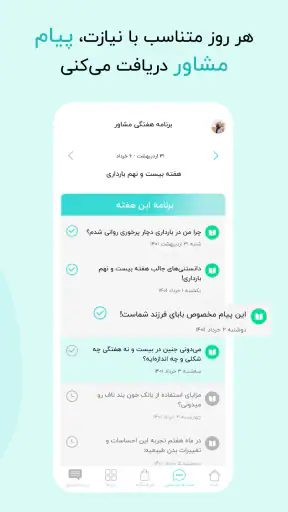

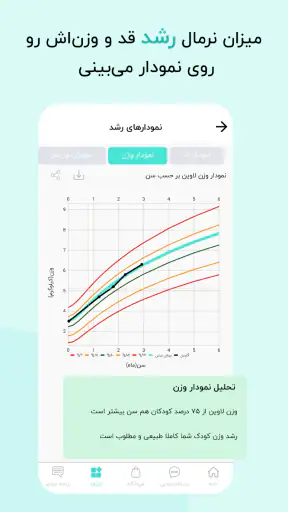
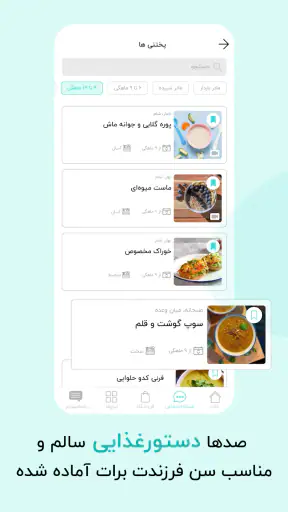
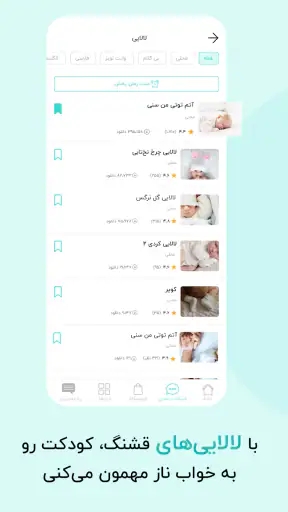
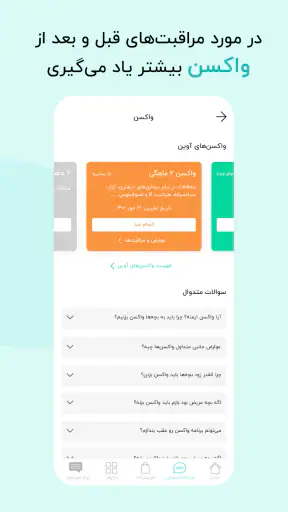
Parenting advice is easy to find, but useful advice at the right stage of family life is much harder to organize. گهواره تربیت کودک و بارداری, developed by Gahvare Family, takes a focused approach: it is a free parenting app built around learning with your child’s age in mind and connecting with other mothers. I found that its real value is not in replacing a doctor, a book, or a personal support network. It is in giving everyday questions a more approachable place to start.
The app belongs to the Parenting category and is available for Everyone. It has grown to over a million installs and holds a 4.3 average from around eight thousand ratings, which suggests that it has reached many families while still leaving room for mixed experiences. I would describe it as a companion for parents who want age-related guidance and community discussion in one place, rather than as a complete medical or developmental reference.
How گهواره fits into real family life
My first impression is that the age-based idea makes sense for tired parents. Advice about sleep, feeding, communication, play, pregnancy, and early development can become confusing when everything is presented together. Organizing learning around a child’s age gives the reader a more practical starting point. Instead of asking, “What should every parent know?” I can ask, “What is relevant to my family right now?”
That distinction matters during ordinary, messy days. Imagine a parent noticing that a toddler has become unusually selective with food, or a new mother wondering whether a particular behavior is typical for the child’s stage. A broad web search can return alarming results, advertisements, and advice aimed at completely different ages. An app centered on parenting stages can reduce that initial searching and help the parent frame a better question before deciding what to do next.
I also like the combination of learning and discussion. Parenting information can feel abstract when it is read alone. Conversations with other mothers may add practical context: how a routine fits around work, how a family adapted an idea, or which parts of a recommendation were difficult in real life. That community element is useful when treated as shared experience rather than professional diagnosis.
The app is not the right choice for someone seeking a tightly structured clinical service. I would not use a parenting community to make decisions about urgent symptoms, medication, pregnancy complications, or developmental concerns that require assessment. In those situations, a qualified healthcare professional should remain the main source of guidance. The app works better as a preparation and education tool: it can help me understand what I want to ask, but it should not become the final authority.
What the developer and the app’s scale tell me
Gahvare Family has kept the product available as a free app, which makes it easier for parents to try without making an immediate financial commitment. The current version is 5.618.1, and it supports devices running Android 5.0 or later. That broad operating-system requirement is helpful for families using older phones, although the experience can still depend on the device, screen size, and software environment.
The app was released on August 6, 2018, so it is not a brand-new experiment. Its long availability and install base make it feel more established than a newly launched parenting tool. At the same time, longevity alone does not prove that every article, discussion, or recommendation is suitable for every family. I still need to judge individual content carefully, especially when a topic involves health, safety, or a child’s emotional wellbeing.
The store’s short description is simply “گهواره,” while the broader summary presents the service as age-based learning and consultation with other mothers. That contrast is worth noting: the app’s identity is strongly tied to its Persian name and audience. For a Persian-speaking parent looking for culturally familiar conversations, that focus may be a major advantage. Someone who needs extensive content in another language should check the actual reading experience before committing time to it.
Trust begins with visible choices
When I review a parenting app, I pay attention to more than whether the interface looks friendly. Parents may discuss pregnancy, children’s health, family routines, and emotionally sensitive experiences. That makes trust a practical issue. I want to know what I am choosing to share, which parts are public or community-facing, and whether I can use the app without exposing more personal information than necessary.
The safest approach is to treat every discussion area as a place where privacy choices matter. I would avoid posting a child’s full name, exact location, school details, identifiable photographs, or a combination of medical details that could make the family easy to recognize. Even when a community feels supportive, a post can travel beyond the original conversation through screenshots or copied text.
I also recommend reading each screen before accepting an account prompt, joining a discussion, or submitting a question. A parent who only wants age-based reading may not need to participate in every social feature. Keeping the account limited to the functions I actually use is a sensible way to reduce unnecessary exposure and notification fatigue.
The most trustworthy habit is not blind confidence; it is deliberate sharing. I would use the app for general learning and carefully worded questions, but I would keep personal identifiers and highly sensitive medical information out of community posts. That is good practice for any parenting platform, particularly one that encourages conversation between users.
Practical controls that improve the experience
The strongest control available to any user is deciding how much of the app becomes part of daily life. I would begin with one clear purpose, such as following age-relevant learning, rather than trying to read every discussion. This prevents the common problem of turning parenting guidance into another endless feed.
It also helps to separate three kinds of information while reading:
- General education, which can broaden my understanding and suggest ideas to explore.
- Personal experience, which may offer encouragement but is not proof that the same approach will work for my child.
- Professional guidance, which should carry more weight for medical, safety, and developmental decisions.
This simple classification is one of the most useful ways to use a community-based parenting app responsibly. A mother’s successful sleep routine may inspire me, but it does not establish that my baby has the same needs. A discussion about pregnancy discomfort may help me describe my own symptoms more clearly, but it should not replace a clinical evaluation.
I would also save only the advice I can explain later. If a post recommends a complicated routine, I would ask myself what problem it is meant to solve, what age it suits, and what signs would tell me to stop. That small pause prevents the app from becoming a source of pressure. Parenting advice is more helpful when it gives options instead of making a parent feel guilty for not following one perfect method.
Another useful workflow is to turn reading into questions for a real appointment. For example, I might note that several discussions mention a recurring concern, then ask a pediatrician or midwife whether it applies to my situation. This makes the app a preparation tool rather than a substitute for care, and it gives a healthcare visit more structure.
Where privacy deserves extra attention
Pregnancy and early childhood topics can be deeply personal. A parent may be tempted to publish details while feeling worried, exhausted, or isolated. I would be especially cautious during those moments. Before posting, I would remove names, dates connected to appointments, photographs with visible documents, and details about where the family lives or spends time.
Questions about a child’s behavior also deserve careful wording. Instead of identifying the child through a detailed story, I can describe the general age range and the broad issue. That usually gives other users enough context to respond without creating a permanent record full of unnecessary personal information.
Account controls matter here, but so does the user’s own editing discipline. I would review old posts occasionally and delete anything that no longer feels appropriate to keep visible. I would also avoid moving a conversation to a private channel with a stranger simply because the exchange feels friendly. Support can be valuable, but a parenting app should not encourage me to hand over sensitive family information casually.
For children, the privacy standard should be stricter than it is for my own ordinary preferences. A child cannot meaningfully approve every story a parent shares about them. I would therefore keep identifiable details to a minimum, even when a post seems harmless today. This is not a criticism of the app specifically; it is a necessary boundary whenever family discussions happen online.
What I would use it for each day
My preferred routine would be short and purposeful. I would open the app when I have a specific parenting question, read material connected to my child’s stage, and write down one or two ideas that seem realistic. I would not try to redesign the entire household after reading a single discussion. Small experiments are easier to evaluate and less stressful for both parent and child.
For example, if evenings are difficult, I might use the age-focused material to think about a calmer sequence before bedtime. I would then change one part of the routine, observe how my child responds, and keep the approach only if it fits our family. Community comments could provide alternatives, but I would treat them as suggestions rather than instructions.
During pregnancy, I would use the learning material to organize questions and understand common themes, while keeping personal symptoms between myself and a qualified professional. This is where the app’s convenience can be helpful without overstepping. It can make me feel more prepared for a conversation, but it cannot examine me or understand the full medical context of my pregnancy.
For parents who feel alone, the discussion side may be the most meaningful part. Reading that other mothers have faced similar frustrations can reduce the sense that every difficulty is a personal failure. Still, community reassurance has limits. If a concern is persistent, severe, or frightening, I would stop browsing and seek appropriate help.
How it compares with familiar alternatives
Compared with a general search engine, the app offers a more parenting-specific path into a question. A search engine is faster for finding a single fact, but it can mix reliable medical material with personal blogs, outdated advice, and attention-grabbing claims. Gahvare’s age-centered structure is more useful when I want a learning journey rather than one isolated answer.
Compared with a parenting book, the app is more immediate and potentially more conversational. A book may provide a carefully developed framework that is easier to read from beginning to end, while an app can respond better to the changing questions of daily life. I would choose a book when I want depth and a stable point of reference; I would choose this app when I want accessible, stage-related guidance and the perspective of other mothers.
Compared with a private chat group, the app has a clearer identity as a parenting service. A small group may feel warmer and more personal, but it can also amplify one family’s habits or circulate unverified claims quickly. The app’s broader setting may offer more varied experiences, though that variety means I need to filter advice carefully.
Compared with a medical application, it serves a different purpose. A medical app may be better for appointments, medication reminders, symptom tracking, or direct clinical communication when those functions are available. Gahvare is more appealing when the need is educational and community-based. Choosing between them depends on whether I need support for understanding parenting life or a tool connected to formal healthcare.
Who should try it, and who should skip it
I would recommend trying it to Persian-speaking expectant parents and mothers who want age-related parenting material in one place. It is also a reasonable option for someone who benefits from hearing how other mothers handle ordinary challenges, provided that person is comfortable applying strong privacy boundaries.
It may suit a parent who is overwhelmed by broad online searches and wants a more focused starting point. The free price removes one common barrier to experimentation, and the Everyone rating makes the app broadly approachable from an age-classification perspective. That does not mean every conversation will be suitable for every child or situation, so adult judgment remains important.
I would skip it if I am looking for emergency advice, a replacement for a pediatrician or midwife, or a tightly controlled clinical record. I would also look elsewhere if I strongly dislike community discussion or prefer all guidance to come from named professionals. In those cases, a medical service, a trusted book, or a direct appointment may be a better fit.
Parents who are sensitive to notifications, social comparison, or conflicting opinions should use it selectively. Community content can be comforting one day and unsettling the next, especially when users describe very different routines as if they were universal. I would mute or limit anything that increases anxiety rather than helping me make a calm decision.
My cautious verdict
After looking at its purpose, audience, and practical role, I see گهواره تربیت کودک و بارداری as a useful parenting companion rather than an all-purpose authority. Its clearest strength is the combination of age-aware learning and mother-to-mother discussion. That pairing can make everyday parenting questions feel less scattered and less lonely.
The app’s free access, broad device support from Android 5.0 onward, and established presence make it easy to test. Its 4.3 average and around a million-plus installs also show that it has reached a substantial audience, although popularity should not replace personal judgment about content or privacy.
My recommendation is to use it with a clear boundary: read for ideas, compare perspectives, protect family details, and take medical or urgent concerns to qualified professionals. If I follow that approach, the app can earn a place in my parenting toolkit without becoming the only voice I listen to. For parents who want stage-specific learning and carefully managed community support, it is worth trying; for those seeking clinical care or completely private guidance, another type of service will be the better choice.


